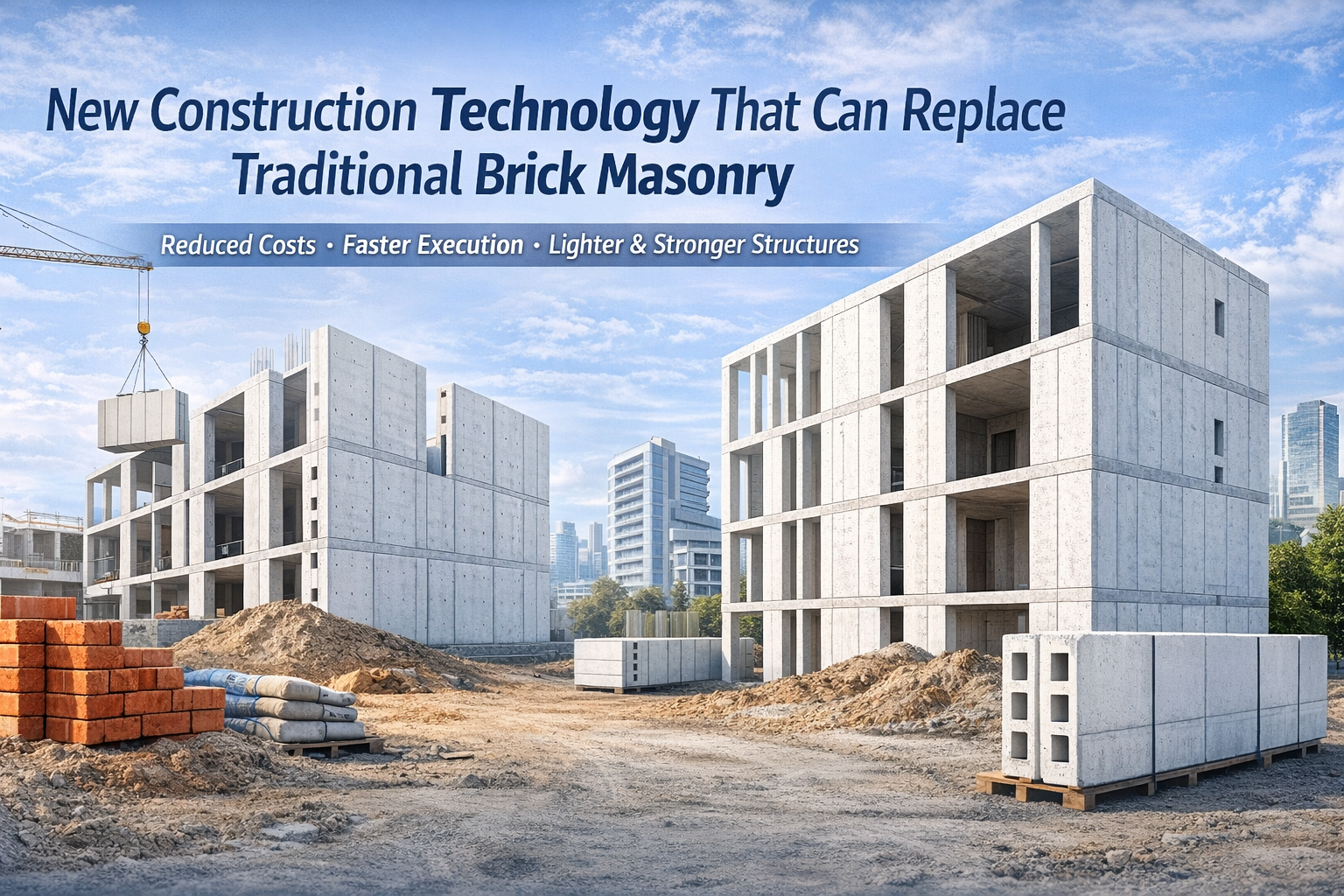
The Next Generation of Construction: Understanding GFRG Panels for Developers
The civil engineering and construction sectors are undergoing a quiet revolution, driven by the need for faster project timelines, reduced material waste, and improved structural performance. Traditional brick and concrete masonry, while time-tested, presents inherent limitations in speed and weight. A significant advancement challenging this status quo is the introduction of Glass Fiber Reinforced Gypsum (GFRG) panels, often marketed under proprietary names like Rapidwall. For developers and construction technologists focused on efficiency and innovation, understanding the technical merits and practical deployment of GFRG is crucial for future-proofing large-scale projects.
What Exactly Are GFRG Panels? A Technical Deep Dive
GFRG panels are engineered composite building units designed to serve as load-bearing or non-load-bearing infill walls. Fundamentally, they consist of a gypsum core, which is cast and reinforced internally with continuous strands of glass fiber. This combination results in a material that possesses high compressive strength relative to its low density. Unlike standard drywall or plaster, GFRG panels are structurally integrated elements. The manufacturing process involves mixing calcined gypsum (plaster of Paris) with water and specialized admixtures, casting this slurry around a dense mesh of glass fibers, and then curing the composite under controlled conditions. This process ensures uniform distribution of the reinforcement throughout the gypsum matrix, enhancing flexibility and crack resistance significantly compared to monolithic gypsum products.
From a developer’s perspective, the key differentiator is the material’s composition. Gypsum offers excellent fire resistance and acoustic dampening properties inherent to many interior finishing materials, but the glass fiber reinforcement elevates its structural capabilities. This means that the finished wall system often requires less secondary finishing work, potentially shaving weeks off the post-erection timeline. Furthermore, because the panels are factory-prefabricated to exact dimensions, on-site cutting and waste generation are minimized, offering a significant advantage in sustainable site management.
Execution Time Revolution: How GFRG Accelerates Project Timelines
One of the most compelling arguments for adopting GFRG technology centers on execution speed. Traditional masonry demands meticulous curing times, labor-intensive laying of blocks, and often requires substantial scaffolding for high-rise applications. GFRG panels, however, are lightweight and large-format, typically manufactured in sections that can span several meters in both height and width.
Installation is akin to assembling pre-cut modules. Panels are craned into position and rapidly joined together using specialized jointing compounds that cure quickly. Because the panels arrive with an inherent smooth finish, site activities like plastering or rendering can often begin almost immediately after vertical alignment is achieved and secured. This sequential acceleration—where structural erection and preparatory finishing overlap—drastically compresses the critical path of construction schedules. For high-volume residential or commercial builds where time equals money, this rapid deployment capability translates directly into earlier revenue realization.
Structural Efficiency: Lightweight Design and Cost Reduction
The combination of high strength and low density inherent in GFRG panels offers profound advantages in structural engineering design, particularly concerning foundation requirements and material handling. GFRG structures impose significantly lower dead loads onto the building’s foundation system compared to reinforced concrete or even standard blockwork walls.
Lower dead loads mean that the supporting superstructure—beams, columns, and foundations—can often be downsized. In large-scale projects, this material reduction in primary load-bearing elements leads to substantial direct cost savings on concrete and steel. Moreover, the lighter weight simplifies logistics; smaller cranes may suffice, and handling injuries on site are reduced due to the panels’ manageable weight-to-size ratio. The cost reduction is compounded by lower labor costs associated with faster erection and reduced requirements for heavy lifting equipment throughout the construction lifecycle. Developers must factor in the initial procurement cost, but the lifecycle savings across materials, labor, and time often present a superior economic model.
Integration Challenges and Developer Considerations
While the benefits are clear, developers must approach GFRG integration strategically. Successful deployment requires adapting existing workflows and ensuring workforce competency. While panel joining is simpler than block laying, precise site preparation is non-negotiable; the connection points between panels and the primary structural frame must adhere strictly to engineering tolerances to ensure load transfer integrity.
A key technical consideration is service integration. While the gypsum core is workable, running extensive electrical conduit or plumbing within the panels requires pre-planning or specialized drilling techniques that differ from traditional methods. Successful projects integrate MEP (Mechanical, Electrical, and Plumbing) routing into the design phase, often utilizing the hollow cores or routing within the panel thickness before final installation, rather than relying on extensive post-erection chasing.
Key Takeaways
- GFRG panels utilize a glass fiber reinforcement within a gypsum core to achieve a material with high strength-to-weight ratio.
- The prefabricated, large-format nature of these panels drastically reduces construction execution time by allowing parallel finishing tasks.
- Lower structural dead loads translate to cost savings in foundations and the primary load-bearing frame.
- Successful adoption requires detailed design planning for utility integration, treating the wall system as a structural and finishing component simultaneously.